
Remember when the only way to ask a business a question was to call them during office hours? Those days are mostly gone. Most people now check a website first, and if they don’t get an answer fast, they just move on to the next search result. That’s basically why chatbots exist now, and why so many small businesses are adding them.
This guide walks through what a chatbot really is, the different kinds you’ll run into, and how one might actually help your business, without the tech-speak.
What is a Chatbot, Really?
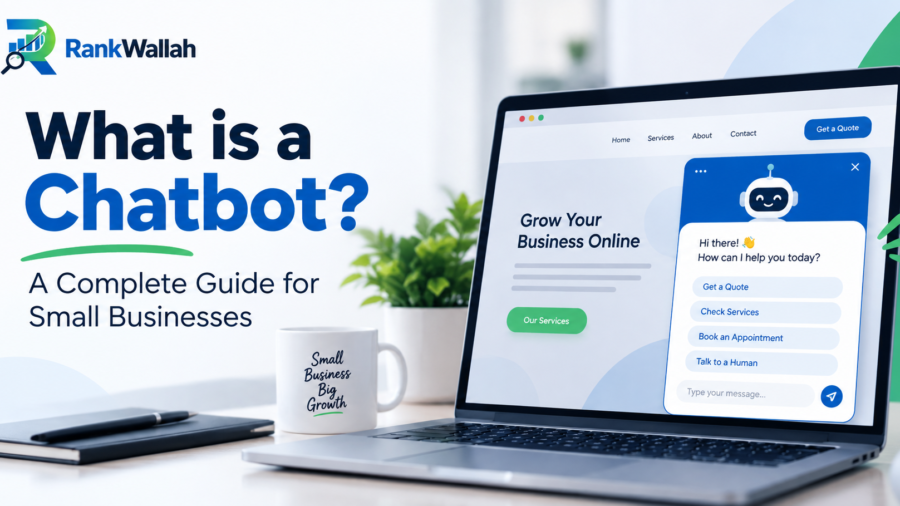
Put simply, a chatbot is a small program on your website that chats with visitors through a message window. It answers the questions people ask over and over, grabs a visitor’s contact details, and nudges them toward booking a service or getting a quote.
You can think of it a bit like a receptionist who never clocks out. It won’t handle every tricky situation the way a real person would, but it takes care of the routine stuff so your team isn’t stuck answering “what are your hours” for the tenth time that day.
The Main Types of Chatbots
Not every chatbot works the same way. Here’s a rundown of the three you’ll typically see.
Rule-Based Chatbots
These run on a fixed script. If someone types something the bot recognizes, like “book a cleaning,” it follows a set path, maybe asking for a date, then an address, then confirming.
A pest control company might use this kind of bot to show a simple menu: “Get a Quote,” “Schedule an Inspection,” “Emergency Service.” Click one, and you’re guided through a form.
They’re cheap and quick to set up. The catch is they fall apart the second a visitor asks something the script wasn’t written for.
AI-Powered Chatbots
This type uses natural language processing, which is just a fancy way of saying it tries to understand what someone means rather than matching exact words.
Say a shopper on an ecommerce site types “need something under 2000 for a birthday gift.” An AI bot picks up on the price limit and the occasion, and shows relevant products instead of just shrugging because the phrasing wasn’t exact.
These cost more to set up and take a bit of training, but they handle a much wider range of questions and tend to get better the more they’re used.
Hybrid Chatbots
Hybrid bots mix both. Rules handle the easy, high-volume stuff like hours or pricing, and the bot switches to AI or hands off to a human once things get complicated.
A healthcare clinic might use one this way: it instantly answers “what are your hours,” but the moment someone starts describing symptoms, it recognizes that this needs a real person and books a callback instead.
For most small businesses, this middle ground tends to work best.
Rule-Based vs AI-Powered, Side by Side
| Feature | Rule-Based Chatbot | AI-Powered Chatbot |
| Setup cost | Low | Moderate to high |
| Handles unexpected questions | No | Yes |
| Gets better over time | No | Yes |
| Best for | Simple, repetitive queries like hours or booking links | Varied questions, personalized suggestions |
| Setup time | Fast | Slower, needs training |
| Maintenance | Manual script edits | Less manual work once it’s trained |
It’s Not Just About Answering Questions
A chatbot does more than field FAQs. If it’s set up well, it can quietly support your local SEO and conversions too, in ways that aren’t always obvious.
Dwell time. When someone actually chats with your bot instead of bouncing after ten seconds, they spend longer on the page. Search engines tend to read that as a sign the page is worth something.
Bounce rate. A visitor who gets a quick “yes, we service your area” is a lot less likely to leave right away. Fewer people leaving instantly is good for both the visitor’s experience and your rankings.
Capturing leads. Not everyone who lands on your site is ready to buy today. A chatbot can still grab their name, number, or email before they click away, which is a lead you’d otherwise have lost entirely.
Reviews. Some bots can prompt a happy customer to leave a Google review right after a good interaction. That directly helps your Google Business Profile and local visibility.
If you’re not sure how your site is doing on any of this right now, a full SEO audit is a decent place to start before layering a chatbot on top.
How This Plays Out by Industry
Kitchen & Bath Remodeling: A chatbot can qualify a lead before they even fill out a contact form, asking about project type, rough budget, and timeline. That way your sales team is calling back people who are actually serious, not everyone who clicked around the site once.
Pest Control: Same-day requests are pretty normal here. Letting a visitor pick their pest problem, drop in their address, and see an open slot right away removes a lot of the friction of waiting on a callback.
Cleaning Services: Repeat bookings keep this business running. A chatbot handling “can I reschedule my cleaning” or “what’s included in a deep clean” instantly takes a real load off the phones during busy hours.
Why Businesses Bother With This
It never sleeps. Your bot is working nights, weekends, holidays, catching the leads that would otherwise go to whichever competitor answered faster.
Answers come quicker. People get a response in seconds instead of waiting on a callback, and that matters a lot when they’re comparing you to two other businesses at the same time.
Less pressure on your team. The repetitive stuff, pricing, hours, service area, gets handled on autopilot, so your staff can focus on calls that actually need a human.
Better sense of who’s serious. A few upfront questions help you tell the difference between someone ready to book and someone just browsing.
Same answer every time. A busy staff member juggling calls might give slightly different answers depending on the day. A bot doesn’t have that problem.
Useful data. What people ask your chatbot tells you a lot, and that’s genuinely useful when you’re rewriting service pages or FAQs later.
Picking the Right One for Your Site
Before you commit to a tool, run through this:
- Match it to how many questions you actually get. A handful of repeat questions a day? Rule-based is fine. Varied, detailed questions? Go AI or hybrid.
- Check it connects to your booking or CRM setup. Leads should flow straight into whatever system you already use, not create more manual work.
- Make sure a human handoff exists. There should always be a way for someone to reach a real person if the bot can’t help.
- Try it on your phone. Most local traffic comes from mobile, so the chat window needs to actually work on a small screen.
- Look at the full cost, not just the price tag. Factor in the time it takes to write scripts or train the AI, not just the subscription fee.
- Don’t overbuild on day one. Launch with the basics, see what the conversations look like after a month, then expand from there.
Wrapping Up
A chatbot won’t replace your team, but it does make sure nobody leaves your site empty-handed without at least getting a quick answer. In a competitive local market, that alone can be the difference between winning a lead and losing it to whoever’s website responded faster.
If you’re thinking about pairing a chatbot with a stronger local SEO push, or your site needs a rebuild to support tools like this properly, RankWallah’s website development and local SEO services can help. Get in touch to see where things stand right now.